
Buying or already living in a 30-year-old HDB flat is common in Singapore. As of 2026, 662,266 of 1,179,156 HDB dwelling units, or 56.2%, sit in blocks that are 30 years old or older. Before you plan new cabinets or colours, inspect the parts of the flat that have been working the hardest: pipes, wiring, windows, ceilings and toilets.
This is a renovation checklist, not a property market brief. The figures come from HDB’s Property Information dataset on data.gov.sg, updated 8 October 2026. For the works themselves, start with HDB’s official renovation guidelines and use a contractor from HDB’s directory.
What the data shows
The table below groups every HDB dwelling unit by the age of its block in 2026. More than a quarter of all units are in blocks aged 40 to 49 years. Another 27,484 units, in 269 residential blocks completed in 1996, turn 30 this year. Those 1996 blocks are mostly 4-room and 5-room flats, so a first renovation there is often a larger job than a compact 3-room.
| Block age in 2026 | Dwelling units | Share of all units |
|---|---|---|
| Under 10 years | 176,830 | 15.0% |
| 10 to 19 years | 151,304 | 12.8% |
| 20 to 29 years | 188,756 | 16.0% |
| 30 to 39 years | 202,277 | 17.2% |
| 40 to 49 years | 323,069 | 27.4% |
| 50 years or more | 136,920 | 11.6% |
| 30 years or more | 662,266 | 56.2% |
| All HDB units | 1,179,156 | 100% |
Source: HDB Property Information on data.gov.sg, updated 8 October 2026. Block age is calendar year 2026 minus the year the block was completed. Figures are total dwelling units.
Block age is not the same as the condition of your unit. A 30-year-old HDB flat that was fully renovated ten years ago may be in better shape than a younger flat that was never touched. Age still tells you which items deserve a closer look.
30-year-old HDB flat checks
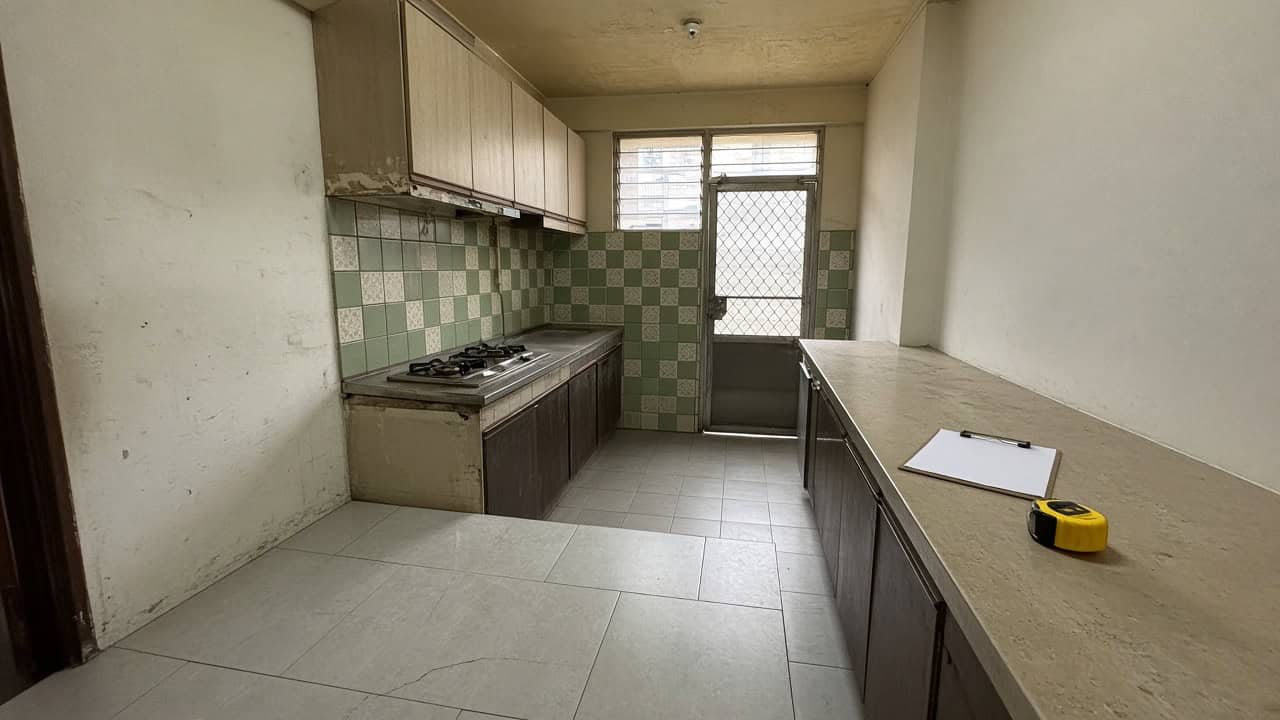
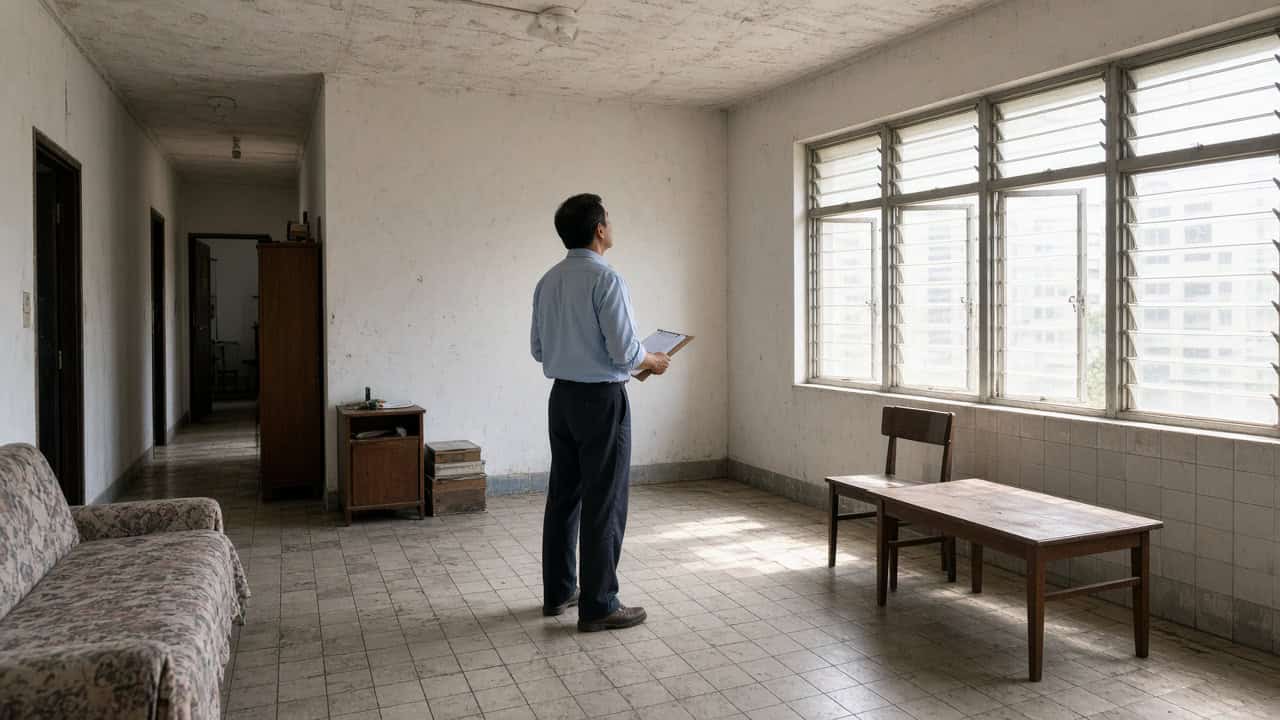
A 30-year-old HDB flat should be walked with your contractor before any design talk. Ask the seller, or check old receipts, for when the toilets, wiring and windows were last changed. Then go room by room:
- Open every tap and flush every toilet. Note slow drainage, dripping valves and rust-coloured water.
- Switch on major appliances together and see whether any circuit trips.
- Tap floor and wall tiles. A hollow sound often means tiles have lifted from the screed.
- Look up. Check the ceiling below toilets and the kitchen for stains or flaking paint.
- Open and close every window. Check rivets, stays, handles and safety stoppers.
- Check the main door, gate and internal door frames for warping or termite damage.
Photos of each issue help later, because every contractor can then price from the same list.
Pipes and plumbing
Concealed water pipes and worn fittings are a common source of leaks and low pressure in a 30-year-old HDB flat. If you are already opening the kitchen or toilets, it is usually the right time to replace the pipes in those areas, rather than tearing finished walls open again later.
Water service and sanitary works must be carried out by a PUB Licensed Plumber. PUB sets out what counts as regulated work on its plumbing works page. Our plumbing services cover pipe replacement, taps, sinks and toilet bowls as part of a larger renovation.
Wiring and the DB
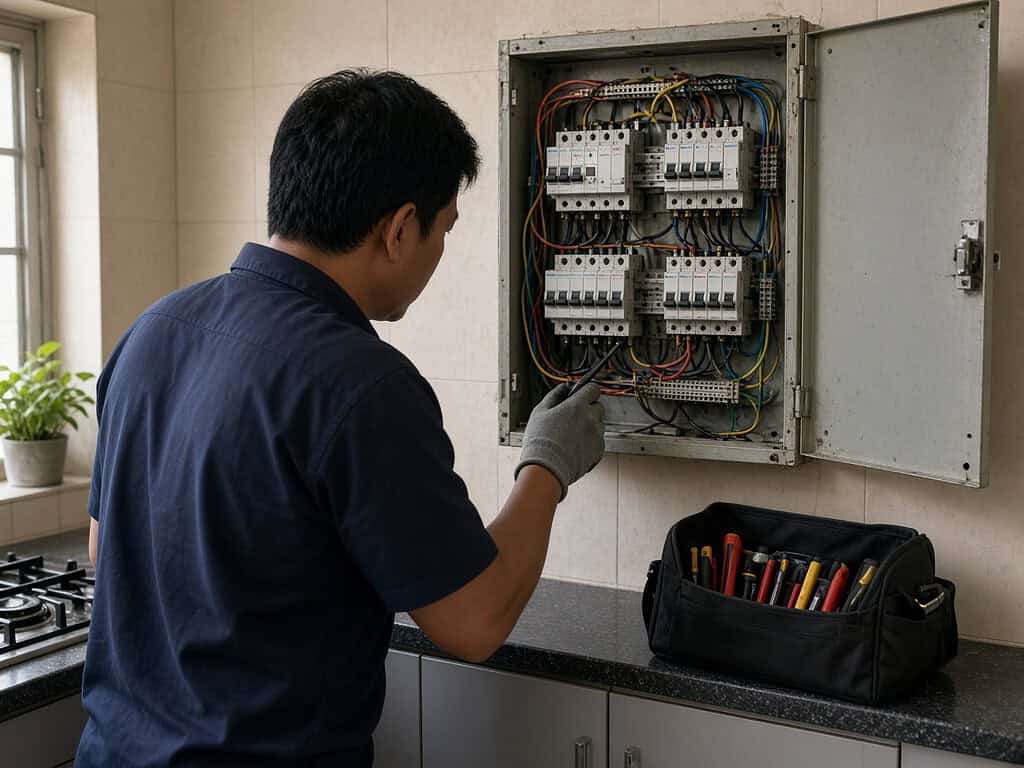
Many older flats were wired for fewer appliances than homes run today. Air-conditioners, induction hobs, ovens and a home office put more load on the circuits than the original layout expected. Warning signs include warm switch plates, scorched sockets, frequent tripping and a tangle of extension cords.
Ask for a check of the distribution board, the circuit breakers and the earth leakage protection before you plan new lights or power points. Some electrical works also need an HDB permit. Read HDB’s guidelines for electrical works early, and have the work done by an electrical worker licensed by the Energy Market Authority. Our team handles electrical wiring for HDB flats through licensed workers.
Windows and fittings
Window parts wear out after decades of rain and use. Rivets corrode, stays loosen, and safety stoppers on sliding windows can go missing. The Building and Construction Authority’s window safety guide lists what owners should check, and casement windows should use stainless steel rivets rather than aluminium ones.
If you are replacing windows, the work must be done by an approved window contractor. Plan this early, because new frames affect curtains, grilles and the plaster around the opening.
Ceilings and walls
Brown water stains on the ceiling usually point to a leak from the unit above, or from your own toilet. Cracked or flaking plaster can also hide spalling concrete, where the steel inside the slab rusts and pushes the finish outward.
Do not cover these problems with a false ceiling until the source is found. If the leak comes from the flat above, the repair involves the upstairs owner, so sort it out before hacking starts. In kitchens and toilets, rust marks around exposed pipes and at ceiling corners are also worth photographing for the survey.
Toilets and wet areas
Toilets are often the single biggest job when you renovate a 30-year-old HDB flat. Original waterproofing, cracked tiles and worn floor traps can let water into the slab. If the toilets have never been fully redone, plan for hacking, new waterproofing, new tiles and new fittings, not just a change of sanitary ware.
Our bathroom and toilet renovation service covers this wet work as part of a wider flat renovation.
Floors and tiles
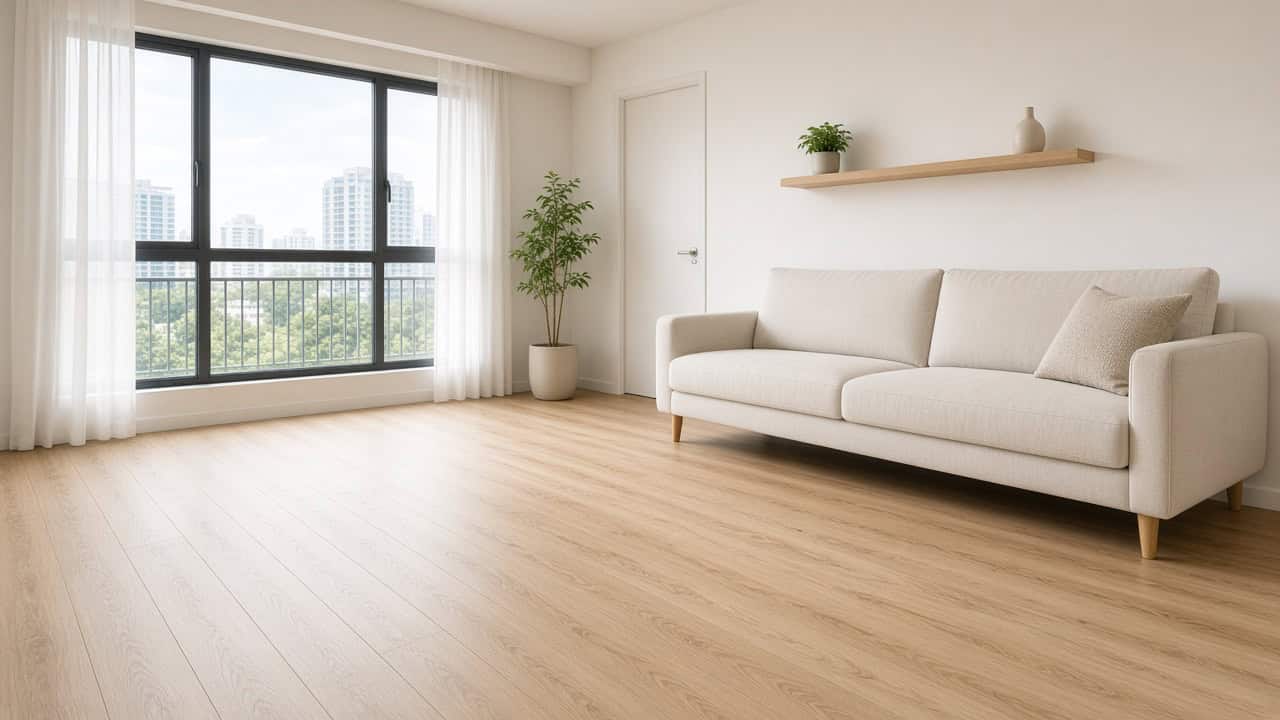
Original floor tiles in older flats often crack or sound hollow. You can hack and retile, or lay a new floor over tiles that are still sound. Laying vinyl over existing tiles does not require an HDB permit; replacing tile finishes generally does. An SPC vinyl overlay is one practical option when the existing tiles are still sound.
Planning the sequence
Work in a 30-year-old HDB flat goes more smoothly when hidden trades come first. A typical sequence looks like this:
- Survey and a written scope.
- HDB permits where needed, filed through your contractor.
- Hacking and removal of old finishes.
- Plumbing and electrical work inside walls and floors.
- Waterproofing, then tiling.
- Windows, ceilings and plastering.
- Carpentry and painting.
- Flooring, fittings, cleaning and handover.
This order means you do not pay to break new finishes just to reach an old pipe. Keep a contingency for what only shows up after hacking, such as rusted pipes or hollow screed.
What drives cost
We do not publish a single renovation price for a 30-year-old HDB flat, because the hidden work varies so much from unit to unit. The main cost factors are:
- How many toilets need full hacking and waterproofing.
- How much pipe and wiring is replaced, and whether it is concealed.
- Whether floors are hacked or overlaid.
- Window replacement or repairs.
- Ceiling and concrete repair, if needed.
- The carpentry and finishing scope.
Ask every contractor to price these items on separate lines. That makes quotes easier to compare and shows where the money actually goes.
Get a renovation quote
Send us photos of the toilets, ceilings, windows and distribution board, plus a floor plan if you have one. We will tell you which hidden works to put first in your 30-year-old HDB flat and price them line by line.
Start with our HDB renovation page, then request a free quote or WhatsApp +65 9731 6300. We are open Monday to Friday, 9am to 6pm, and Saturday, 9am to 2pm.